 I Want To



Collaborative effort leads to identification of Missing Person, Pamela Harvey (1978 Greater Sudbury)

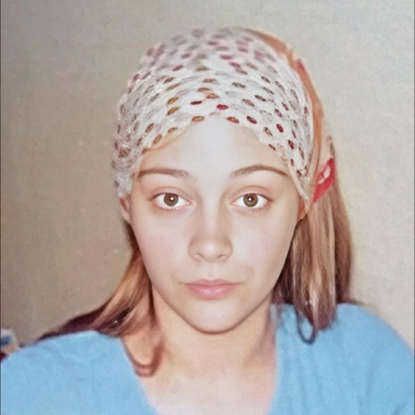 March 31st, 2026 – A collaborative effort between the Sûreté du Québec, the Greater Sudbury Police Service (GSPS), the Québec Coroner’s Office, and the Laboratoire de sciences judiciaires et de médecine légale (LSJML) of the ministère de la Sécurité publique du Québec has led to the location and identification of missing person Pamela Harvey.
Pamela Harvey was reported missing to the Sudbury Regional Police Service (SRPS) on December 25, 1978. She was 23 years old at the time of her disappearance and was last seen in Greater Sudbury.
In March 1979, the body of an unidentified woman was discovered in St‑Eustache, Quebec. Investigators determined that she was the victim of a homicide. Despite the limitations of forensic science at the time, the evidence was carefully collected and preserved by investigators and LSJML forensic specialists and has been securely maintained ever since. Although current technologies were not available at the time, this preservation enabled the use of modern forensic methods, including DNA analysis.
 For the next 47 years, members of the Sudbury Regional Police Service and, later, the Greater Sudbury Police Service remained committed to Pamela’s case. Detectives diligently followed up on every tip and lead, driven by the hope of locating Pamela and providing clarity and closure to those who loved her.
In 2018, the National Missing Persons DNA Program was launched, allowing familial DNA samples to be submitted in support of identifying missing persons and unidentified human remains. GSPS detectives met with Pamela’s family members and collected DNA samples, which were submitted to the national database in the continued effort to resolve her case.
In 2025, within this collaborative framework, a forensic odontologist was able to connect Pamela Harvey’s missing persons case with the unidentified homicide victim discovered in St‑Eustache. This link was established using historical investigative information documented by SRPS detectives at the time of Pamela’s disappearance. Subsequent forensic analysis was conducted from preserved exhibits dating back to 1979 and compared with the familial DNA provided by Pamela’s relatives in 2018, resulting in a positive association through the RCMP National DNA Data Bank and confirmed as a positive identification by the Québec Coroner’s Office.
Advancements in forensic science and DNA technology made it possible to identify Pamela Harvey nearly five decades after her disappearance. This outcome reflects the significant advancements in forensic technologies, which may not have yielded comparable results in earlier years. This confirmation provides long‑awaited answers to Pamela’s family and ensures that her identity and story are no longer unknown.
Through the Sûreté du Québec investigation, detectives determined that the person believed to be responsible for Pamela Harvey’s homicide died in 1979.
After 47 years of uncertainty, Pamela Harvey’s family can finally begin to grieve with answers, knowing that her identity has been restored with dignity and care. Pamela was never forgotten, and her case reflects the unwavering perseverance of investigators across jurisdictions who believed that answers were still possible.
Members of the involved agencies have notified Pamela's family, who have asked for privacy as they navigate this deeply emotional time. At their request, the family will not be participating in media interviews or providing public comment. We respectfully ask the public and media to honour their wishes. We extend our deepest condolences to Pamela’s family and loved ones, whose strength and patience have endured for decades, and our sincere appreciation to the dedicated professionals whose collaboration, compassion, and commitment ensured that Pamela’s story would one day be told. Her life mattered and she will always be remembered.
 Back to Search
 Subscribe to News
 Subscribe to this page