 I Want To



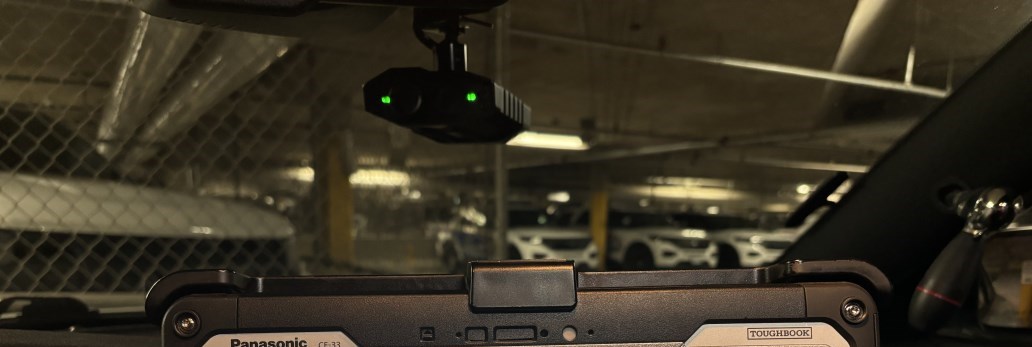
The provincial government has provided funding for police services across Ontario to install Automated Licence Plate Recognition (ALPR) technology. This funding allowed GSPS to equip 31 vehicles with ALPR systems.
ALPR uses cameras and software to automatically scan licence plates. It alerts officers to stolen plates, suspended drivers, missing or wanted persons, and vehicles connected to AMBER Alerts. The system also functions as a full In‑Car Camera system.
GSPS uses ALPR cameras to scan plates around a police cruiser, helping identify suspended drivers, stolen vehicles, and plates in poor standing. Under optimal conditions, ALPR can scan thousands of plates per hour.
For more information about ALPR policies and usage, please visit our Transparency Portal at: Axon Transparency Portal (evidence.com)
| What does ALPR look like? |
|
An ALPR camera is mounted on the windshield of a police cruiser. It faces forward and scans the licence plates of vehicles in front of the cruiser.
|
|
How does it work? |
|
The ALPR system scans licence plates continuously as an officer drives through the city. If the system detects a “hit,” the officer receives an alert and takes appropriate action. For example, if a plate is linked to a suspended driver, the officer may stop the vehicle to confirm who is driving.
|
| What is a Hotlist? |
|
The ALPR system uses a “hotlist” from the Ontario Ministry of Transportation and the Canadian Police Information Centre. This database includes millions of licence plates that are in poor standing. Licence plates on the hotlist may be linked to:
For a complete list of reasons, please read the IPC's report. The hotlist does not provide officers with any new information. It only includes data they could already access by manually running a licence plate through the in‑car computer.
|
|
What happens if you scan my licence plate? Is my information stored in your system? |
|
If your licence plate does not produce a hit, the officer is not notified, and the scan is automatically deleted. If your plate does produce a hit, the officer receives an alert along with basic information about the vehicle and registered owner. This may include the vehicle’s make, model, and colour, and the owner’s name, gender, and date of birth. The officer must stop the vehicle and confirm all information in the hit before taking any enforcement action. |
|
Can the scanner take pictures or video of anything else? |
|
The ALPR scanner is part of the police cruiser’s in‑car video system. It only captures images and video in the same way the in‑car camera normally would.
|
Privacy
The Information and Privacy Commissioner of Ontario (IPC) has released guidelines on the use of ALPRS by police services. The report ensures that the Police Service's use of this technology respects privacy rights recognized under the Canadian Charter of Rights and Freedoms, and that personal information is handled in a lawful manner.
Our collection, retention, use and disclosure of any personal information obtained from the ALPR program is done so in compliance with the Municipal Freedom of Information and Protection of Privacy Act (MFIPPA).
Questions
If you have any questions or concerns related to this technology, please call 705-675-9171.
Contact Us
 Subscribe to this page